
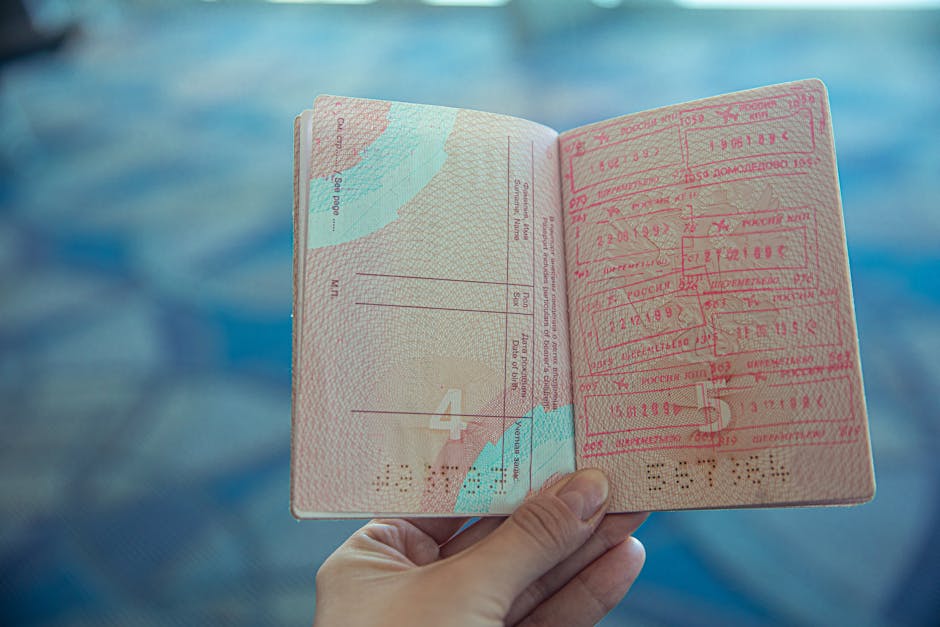

Understanding the D4 Visa to D2 Visa Change
Embarking on an academic journey in South Korea is an exciting prospect, and many international students begin their path with a D4 visa, typically for language studies or vocational training. However, the ultimate goal for most is to pursue a full-fledged degree program, which necessitates a change from the D4 visa to a D2 visa. This transition, the D4 visa to D2 visa change, is a crucial step that requires careful planning and adherence to specific immigration regulations. Failing to understand the nuances of this process can lead to significant delays or even jeopardise your academic aspirations in Korea.
The difference between the D4 and D2 visas is fundamental. The D4 visa is a temporary visa designed for non-degree programs, such as Korean language courses offered by universities or private institutions, or short-term vocational training. In contrast, the D2 visa is specifically for students pursuing higher education at accredited Korean universities, including undergraduate, graduate, and doctoral programs. Therefore, transitioning from a D4 visa to a D2 visa signifies a progression in your educational path and a commitment to a formal degree course.
Successfully navigating the D4 visa to D2 visa change process ensures that you can continue your studies without interruption and enjoy the full benefits of student status in Korea. This article will provide an in-depth guide to the essential steps, potential pitfalls, and key considerations for a smooth and successful transition. We will delve into the documentation required, the timing of your application, and important tips to maximise your chances of approval.
Prerequisites for the D4 visa to D2 visa change
Before you can even think about initiating the D4 visa to D2 visa change, several critical prerequisites must be met. The most important is your acceptance into a degree program at a recognized Korean educational institution. This means you must have completed the application process for your chosen university and received an official Letter of Admission. Without this crucial document, any attempt to change your visa status will be futile.
Your D4 visa status must also be valid and in good standing. If your D4 visa is nearing its expiry or if you have any immigration violations, you may encounter significant difficulties. It’s highly advisable to start the process well in advance of your D4 visa’s expiration date to allow ample time for all procedures.
Furthermore, you must meet the academic and financial requirements set forth by both the educational institution and the Korean Immigration Service. This typically includes maintaining a satisfactory academic record during your D4 program, if applicable, and demonstrating sufficient financial means to cover tuition fees and living expenses for your D2 program. This proof of financial capability is a non-negotiable aspect of the visa application process.
Key Documentation for a Successful D4 visa to D2 visa change
The success of your D4 visa to D2 visa change hinges significantly on the completeness and accuracy of your submitted documentation. The Korean Immigration Service, overseen by the Ministry of Justice, has a stringent set of requirements. While specific documents can vary slightly based on your nationality and the specific university, a core set of paperwork is consistently required.
- Letter of Admission: This is the cornerstone of your application. It must be an official document from the Korean university confirming your acceptance into a degree program (e.g., Bachelor’s, Master’s, Ph.D.).
- Proof of Academic Records: Transcripts and certificates from your previous educational institutions are essential. These demonstrate your academic background and eligibility for the D2 program.
- Proof of Financial Capability: This typically involves bank statements showing a minimum balance (often around KRW 20,000,000 or equivalent, though this figure can fluctuate) held for a specified period (usually 6 months or more). It proves you can support yourself financially during your studies.
- Passport: Your valid passport, with sufficient remaining validity.
- Visa Application Form: The official form downloaded from the Korean Immigration Service website, accurately completed.
- Passport-Sized Photographs: Recent photos meeting specific requirements (e.g., white background, specific dimensions).
- D4 Visa Certificate of Confirmation of Overseas Korean or Student (std-C3-X): While this may seem redundant, it’s sometimes requested to confirm your initial entry status.
- Tuition Fee Payment Receipt: Proof that you have paid at least a portion of your tuition fees for the D2 program.
The Application Process: Step-by-Step Guide to D4 visa to D2 visa change
Executing the D4 visa to D2 visa change requires a methodical approach. The process generally involves applying for a change of status (residence status) at a local immigration office within South Korea. It is generally not advisable or possible to apply for a D2 visa from your home country after having arrived on a D4; the change of status within Korea is the standard procedure.
Step 1: Secure Your Letter of Admission and Pay Tuition Fees. This is the absolute first step. Ensure you have officially been accepted into a D2-eligible program and have made the required initial tuition payments.
Step 2: Gather All Required Documents. Meticulously collect all the documents listed in the previous section. Ensure they are originals or certified copies as specified by the immigration office. It is also a good idea to have photocopies of everything.
Step 3: Schedule an Appointment at the Immigration Office. Many immigration offices require appointments to be made in advance, especially for complex procedures like visa changes. Visit the HiKorea website (www.hikorea.go.kr) to book your slot or check the specific procedures for your local office.
Step 4: Submit Your Application. On your scheduled appointment day, arrive punctually with all your documentation. You will be guided through the submission process by immigration officers. Be prepared to answer questions about your academic plans and financial situation.
Step 5: Pay the Application Fee. A fee is associated with the change of status application. This is typically paid at the time of submission or when your new alien registration card is issued.
Step 6: Wait for Processing and Receive Your New Alien Registration Card. The processing time can vary, but it generally takes several weeks. Once approved, you will receive a new Alien Registration Card (ARC) reflecting your D2 visa status. This card is your official identification in Korea and is crucial for various activities, including opening bank accounts and renting accommodation.
Potential Challenges and How to Overcome Them in the D4 visa to D2 visa change
While the D4 visa to D2 visa change is a common pathway, it’s not without its potential hurdles. Being aware of these challenges can help you proactively address them and ensure a smoother transition.
One common issue is insufficient proof of financial capability. Universities often have strict minimum balance requirements, and if your bank statements don’t meet these, your application can be rejected. To overcome this, ensure you have a consistently high balance in your bank account for the required duration *before* you apply. Alternatively, a scholarship letter from your university or a sponsorship letter from a reputable organization can sometimes supplement or replace personal bank statements.
Another challenge can arise from discrepancies in documentation or incorrect information. Even minor errors in names, dates, or official seal placements can lead to delays or rejections. Double-checking every document, cross-referencing information, and ensuring all official seals are present and legible are critical preventative measures. If you are unsure about any document requirement, consult with your university’s international student office.
Furthermore, the timing of the application is crucial. Applying too early or too late can create problems. For instance, applying for the change of status before your D4 visa has officially expired but after you’ve completed your language course might raise questions. Conversely, waiting until the last minute to apply can result in your D4 visa expiring before the D2 visa is processed, leaving you in an illegal stay status. It’s generally recommended to initiate the process within the validity period of your D4 visa, ideally after receiving your university’s final admission confirmation and before the D4 visa expiry.
Why a Timely D4 visa to D2 visa change is Imperative
The urgency of completing the D4 visa to D2 visa change cannot be overstated. Remaining on a D4 visa beyond its intended purpose or expiry date while enrolled in a degree program is a violation of immigration laws. This can have serious repercussions, including fines, deportation, and future bans on entering South Korea. The Korean Immigration Service, under the purview of the Ministry of Justice, takes such matters seriously to maintain the integrity of its visa system.
Moreover, a valid D2 visa and Alien Registration Card are essential for daily life as a student in Korea. Without them, you may face difficulties in enrolling in courses, accessing university facilities, opening bank accounts, obtaining a mobile phone plan, or even traveling within the country. The D2 visa officially recognizes you as a degree-seeking student, granting you the rights and privileges associated with that status.
The Korea Research Institute for Human Settlements (KRIHS) has noted the increasing number of international students, highlighting the importance of structured visa pathways. A timely D4 visa to D2 visa change ensures you are properly documented throughout your academic progression, allowing you to focus on your studies and enjoy your experience in South Korea without the constant worry of your immigration status.
Table: D4 Visa vs. D2 Visa – Key Differences
| Feature | D4 Visa | D2 Visa |
|---|---|---|
| Primary Purpose | Language study, vocational training, non-degree courses | Degree-seeking studies (Bachelor’s, Master’s, Ph.D.) at accredited universities |
| Duration | Typically shorter, often renewable depending on course length | Longer, tied to the duration of the degree program, renewable based on academic progress |
| Eligible Institutions | Language institutes, vocational schools, some university-affiliated language programs | Accredited universities offering degree programs |
| Visa Change Requirement | Often requires a change of status to D2 for degree programs | Direct application or change from D4 is the standard route for degree studies |
| Financial Proof | Required, but often less stringent than D2 | More stringent, requires significant proof of funds for tuition and living expenses |
| Work Allowance | Limited or generally not permitted without special permission | Limited part-time work allowed under specific conditions and hours per week (e.g., 20 hours/week during semesters) |
Understanding these distinctions is fundamental to successfully planning your academic trajectory and managing the D4 visa to D2 visa change effectively. The D2 visa opens up more opportunities for long-term academic pursuits and regulated part-time work, which are crucial for many students managing their expenses.
Maximizing Your Chances of a Smooth D4 visa to D2 visa change
To ensure your D4 visa to D2 visa change proceeds without unnecessary complications, proactive engagement and attention to detail are key. Start by consulting your university’s international student support office. These offices are invaluable resources, providing personalized guidance on document requirements, application procedures, and potential timelines specific to your institution and your circumstances. They often have a direct line of communication with immigration authorities, allowing them to stay updated on the latest regulations.
Maintain open communication with your chosen university throughout the process. They need to confirm your enrollment and may be required to provide supporting letters or verification of your academic standing. Any delays on their end can impact your visa application, so stay in regular contact.
Consider the timing of your application very carefully. Ideally, you should aim to submit your change of status application shortly after receiving your official Letter of Admission for the D2 program and have made the necessary tuition payments. Avoid submitting it too early, as your D2 enrollment might not be finalized, or too late, which risks your D4 visa expiring before the D2 visa is processed. A buffer of at least a month before your D4 visa expires is highly recommended.
Finally, be prepared for the interview or scrutiny at the immigration office. While not always mandatory, immigration officers may ask clarifying questions about your study plans, the reason for the visa change, and your financial situation. Honesty, clarity, and a confident demeanor can make a positive impression. Having a well-articulated plan for your degree studies and a clear understanding of why the D4 visa to D2 visa change is necessary for your academic goals will be beneficial.
🔗 D4 visa to D2 visa change 연관 인기 가이드
- ✨ D4 visa to D2 visa change Extensive Industry Report
- ✨ D4 visa to D2 visa change Extensive Industry Report
- ✨ D4 visa to D2 visa change Extensive Industry Report
- ✨ D4 visa to D2 visa change Extensive Industry Report
- ✨ D4 visa to D2 visa change Extensive Industry Report
- ✨ D4 visa to D2 visa change Extensive Industry Report
📚 References & Official Sources
❓ Frequently Asked Questions
What is the main difference between a D4 visa and a D2 visa?
A D4 visa is for non-degree programs like language study, while a D2 visa is for pursuing a degree (Bachelor’s, Master’s, Ph.D.) at a Korean university.
Can I apply for a D2 visa from my home country after entering Korea on a D4 visa?
Generally, you must apply for a change of status within South Korea at an immigration office, rather than applying for a new D2 visa from your home country.
How long does the D4 visa to D2 visa change process typically take?
The processing time can vary but usually takes several weeks after submitting a complete application at the immigration office.
Get in Touch
Have questions about your specific situation? Reach out anytime for a personal consultation.
Email: huh0303@gmail.com